
Effect Pigment Solutions
——R&D, Production, Sales

|
Shen Zhen Esong Technology Co., Ltd. Contact: Miss Cui mobiles: 18926475200 E-mail: 1204047160@qq.com Address: Building B, Kaixin Industrial Park, No. 52, Langyue Road, Tangxiayong Community, Yanluo Street, Baoan District, Shenzhen |
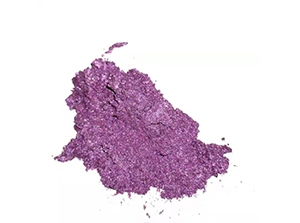
Let's talk about the effect of pearlescent pigments and the mechanism of productionIssuing time:2025-01-15 10:46 1. The basic characteristics of pearlescent pigments Pearlescent pigments include natural pearlescent pigments and constituent pearlescent pigments, which can be used in coatings to obtain pearl luster, rainbow effect and metallic luster effects. Pearlescent pigments are translucent, sheet-like structures with a much larger diameter than thickness. The thin sheet is placed in parallel in layers in the coating film, and the incident light is partially reflected and partially transmitted to produce a common optical performance, that is, multi-angle and colorful, and the color is different when viewed at different angles, sometimes the reflected color is seen, and sometimes the transmitted color is seen, resulting in a three-dimensional luster. 2. The mechanism of the optical properties of mica-titanium pearlescent pigments (1) Pearlescent effect Refers to the pearl-like soft color of pearlescent pigments, which is caused by the interference of light due to the multiple reflections and transmissions of incident light by the titanium dioxide polycrystalline film coated on the mica substrate. For pearlescent pigments with small particle sizes, because the titanium dioxide coating film is coated on a mica sheet, it is divided into many tiny layers like natural pearls, so when the incident light hits its surface, a silky soft light (pearlescent) appears, and this optical property of mica-titanium pearlescent pigments is called the pearlescent effect. (2) Metallic flash effect The visual sensation of flickering that occurs when the specular reflection of light from a metal surface is called the "metallic flash effect". Mica titanium pearlescent pigments can be filmed with other metal oxides, or treated with colorants, to achieve a range of metallic lusters.
For example: Mica titanium pearlescent pigments that simply use titanium dioxide as the coating material can show the silvery-white metallic luster of the gaze, which is called silver-white pearlescent pigments; The silver-white pearlescent pigment is colored with carbon black, with a deep tone, similar to lead powder; The silvery-white pearlescent pigments colored with chromium oxide are similar in color to bronze; Yellow agitated pearlescent pigment colored with iron oxide, with strong golden luster, etc. (3) Perspective flash effect Mica titanium pearlescent pigments are composed of a layer of bright metal oxide with a much higher refractive index than the substrate mica on the surface of a clear mica sheet. When the light rays are repeatedly refracted and reflected, partially absorbed and penetrated at the interface of the bright layer with different refractive indices, the interference of light will occur between the parallel reflected lights, so the pearl-like luster and color will occur. When at the reflection angle of the light, the strongest reflected color can be seen; Off-reflection angles, on the other hand, only pearl white and other colors can be seen. This phenomenon of seeing different interference colors depending on the angle of investigation is called the "angle of view flickering effect". (4) Color transfer effect A continuous coating film made of interference-colored mica titanium pearlescent pigments can show two colors together, and this color change is called the color transfer effect. For example, in pearlescent coatings made of interfering mica titanium pearlescent pigments, the color of the coating film will change with the curvature of the coating surface. The color transfer effect is manifested as a change from blue to orange and from yellow to purple, that is, from the reflective color of the pearlescent pigment to its complementary color. Because of the unique "color transfer effect" of mica titanium pearl, various wonderful decorative effects can be designed according to needs. (5) Additional color effects Mica titanium pearlescent pigments can be mixed with transparent inorganic pigments or organic pigments, and these pigments can be used directly to color pearlescent pigments, resulting in more attractive colors. If the pearlescent pigment is colored with copper phthalocyanine blue or copper phthalocyanine green, its color will not be weakened, but enhanced, which is the unique "additional color effect" of pearlescent pigments, also known as "color enhancement effect". (6) Three-dimensional spatial effect Pearlescent pigments are always transparent or translucent sheets, and when light hits its surface, it always reflects most of the incident light, while the remaining light is projected onto the next layer of pearlescent pigment wafers, repeating the reflection and refraction of light. This is repeated several times until the basal layer is completely reflected and absorbed. This optical property gives pearlescent pigments a profound three-dimensional texture in transparent coatings. When the vision is perpendicular to a certain point of the coating film, the pigment sheets are found embedded in different thicknesses of the coating film. Even though the thickness of the film is very thin, it feels like a thick film. |


mobiles station Wechat QR code
Shenzhen Esong Technology Co., Ltd.
Contact: Miss Cui
mobiles: 18926475200
E-mail: 1204047160@qq.com
Address: Building B, Kaixin Industrial Park, No. 52, Langyue Road, Tangxiayong Community, Yanluo Street, Baoan District, Shenzhen
Pearlescent pigments, color-changing pigments, fluorescent pigments
Main area: Jiangsu, Shandong, Shanghai, Guangdong, Zhejiang, Hebei, Henan, Fujian, Sichuan, Sichuan, Anhui
Record number: Guangdong ICP No. 54622712
©2025 Shenzhen Yisong Technology Co., Ltd. All rights reserved
All articles, contents, pictures and texts on this website are from the